René Descartes
René Descartes
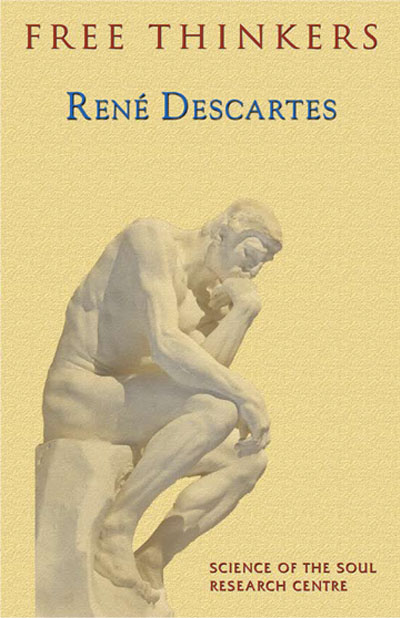
René Descartes is one of the 16 books that is part of the SSRC Philosophers Series called “Free Thinkers.” The series is an attempt to present the teachings of many of the great philosophers throughout history in a way that average readers without academic backgrounds can easily understand. René Descartes (1596–1650) is often referred to as the father of modern European philosophy. He asserted the right of an individual to question received cultural truths in the light of reason. Along with this, he articulated elements of a scientific method familiar to everyone in our modern global civilisation. He established a basis for using geometrical and mathematical proofs to evaluate motion and physical laws, and articulated the need for systematic scepticism and analysis: breaking ‘things’ into parts to study them and test their validity. This included questioning how the non-physical mind can interact with the physical world, thereby setting up the ‘mind-body problem’ that still plagues philosophy to this day. One of his core philosophical approaches was to doubt everything until he encountered at least one premise that he could not doubt – and then to build a logical system on top of that foundation. This is expressed in the famous philosophical maxim, ‘I think, therefore I am’ (French: Je pense, donc je suis). Before Descartes, theology was considered of first importance. After Descartes, natural philosophy (the precursor of modern science) gradually claimed cultural standing as the final authority on truth. This heralded the arrival of modern secular culture.