Islamic Philosophers
Islamic Philosophers
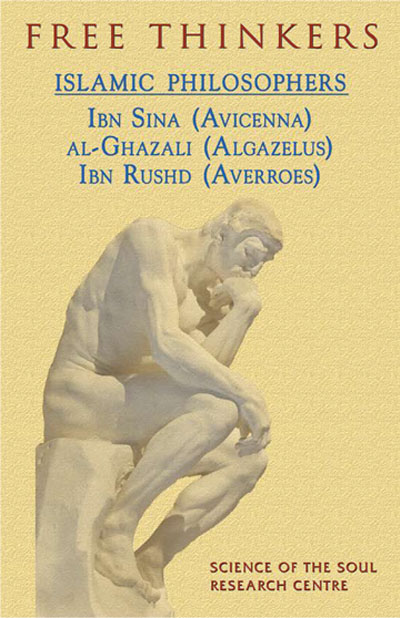
Islamic Philosophers is one of the 16 books that is part of the SSRC Philosophers Series called “Free Thinkers.” The series is an attempt to present the teachings of many of the great philosophers throughout history in a way that average readers without academic backgrounds can easily understand. Philosophy in the Islamic world had to address a set of intellectual problems arising from the tension between philosophy and religion – a tension also present in Jewish and Christian contexts. Since the revelation in the Qur’an was regarded as unquestionably true, ideas formed through logic and reason had to be reconciled with seemingly conflicting statements and concepts in the Qur’an. Ibn Sina (980–1037) perfected the Neoplatonic school of Islamic philosophy and medicine and is regarded by many as the greatest Islamic philosopher. Abu Hamid al-Ghazali (1055-1111) was a practical philosopher who reconciled Sufism and orthodox Islam. Many consider him the greatest Muslim after the Prophet Muhammad. Ibn Rushd (1126–1198) devoted his life’s work to elucidating Aristotle and was recognized in medieval Western Europe as ‘the second master,’ after Aristotle himself. Each of these philosophers represents aspects of a 150-year debate about how to discover truth. Ibn Rushd employed a rigorous logical method to arrive at his conclusions. Ibn Sina was more open to different ways of knowing, promoting reason as well as intuition and even mysticism. Ghazali started his career committed to combining logic and revelation, but later experienced a transformation that led him to Sufism.