Roman Stoics, The
Roman Stoics, The
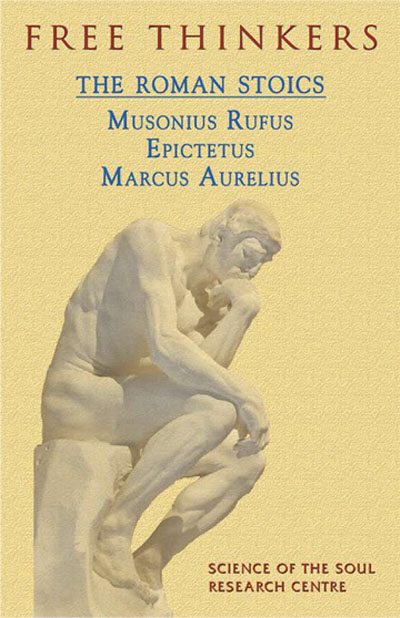
The Roman Stoics is one of the 16 books that is part of the SSRC Philosophers Series called “Free Thinkers.” The series is an attempt to present the teachings of many of the great philosophers throughout history in a way that average readers without academic backgrounds can easily understand. Gaius Musonius Rufus (30-101 CE) was often called the “Roman Socrates” because he used the dialectical method of teaching, was willing to engage anyone from any class in Roman society on the question of truth, and was persecuted by the authorities for questioning the status quo. His most famous student was Epictetus (50-135 CE), who was either born into slavery or enslaved early in life. A student of Epictetus took notes of his informal discussions and assembled them into the book Discourses. In it, Epictetus further develops Stoicism by introducing three disciplines: assenting only to objective judgments, training one’s impulses, and managing one’s desires. He linked these with the three areas of study (logic, physics, and ethics), and the four cardinal virtues (moderation, courage, justice, and wisdom), creating an integrated system grounded in a core belief in the unity of the cosmos, connected by Logos. Marcus Aurelius (121-180 CE) was a Stoic philosopher and Roman Emperor. As a spiritual exercise, he wrote notes to himself in the evenings while on his military campaigns. These were collected into a volume called Meditations, which outlines qualities or virtues essential for a happy life, and also offers a form of therapy to identify weaknesses and offer remedies.