Early Stoics, The
Early Stoics, The
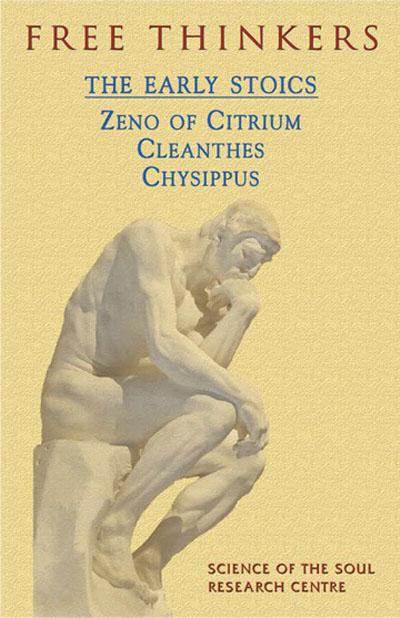
The Early Stoics is one of the 16 books that is part of the SSRC Philosophers Series called “Free Thinkers.” The series is an attempt to present the teachings of many of the great philosophers throughout history in a way that average readers without academic backgrounds can easily understand. The founder of Stoicism, Zeno of Citium (334-264 BCE), read a book about Socrates shortly after a tremendous personal loss. From it, he developed a philosophy and way of life that emphasizes one skill above all others: responding well to losses in possessions, reputation, and health, this by broadening one’s perspective and striving for greater inner depth. He taught resilience in the face of personal trials, and the pursuit of inner freedom when outer freedom becomes unreachable. The name of his school or way of life, “Stoicism,” came from certain colonnades in the Athenian marketplace called the “Stoa Poikile,” or “Painted Porch,” under which he gave discourses. Cleanthes (331-230 BCE) was Zeno’s successor. While Zeno established the overall structure of Stoicism, Cleanthes laid its religious and devotional foundation. He wrote the Hymn to Zeus, the only complete text from the Early Stoics to survive, which is presented in full in this book. His student Chrysippus (280-207 BCE) was a prolific writer, composing over 700 treatises, most of which are lost. Chrysippus further deepened the philosophy in all the three fields of logic, physics, and ethics. He set the stage for Stoicism’s popularity and success over the next 500 years.